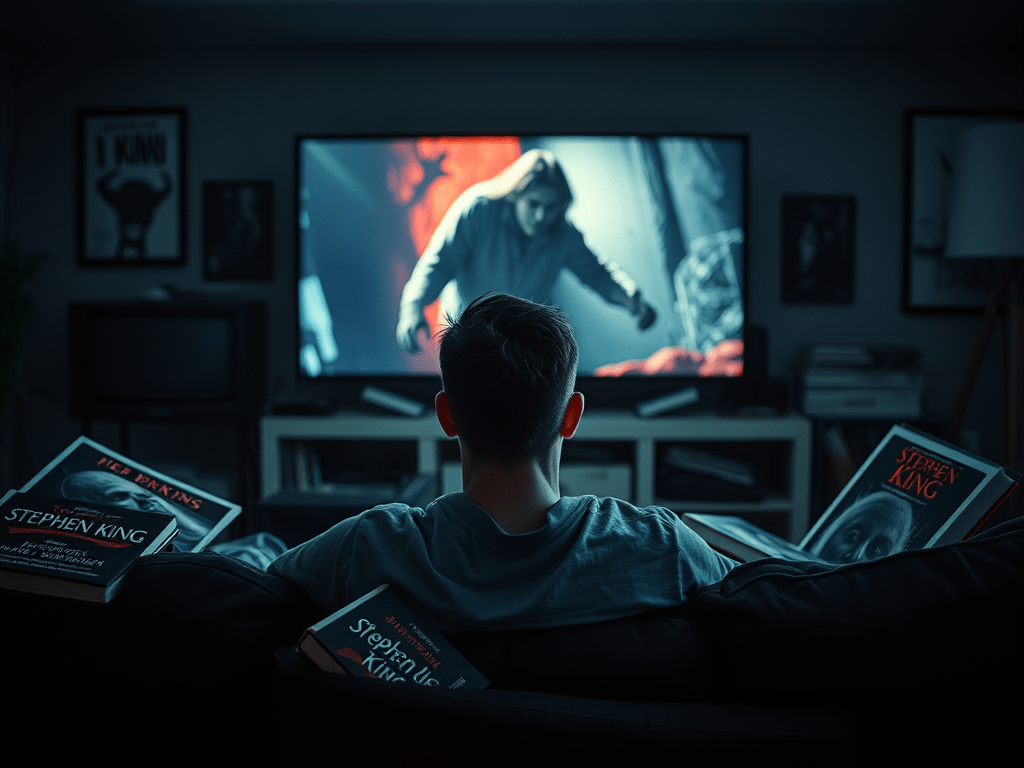
‘Can anyone recommend a movie that will make me not sleep for a week?’ –
I see this plea crop up all the time on horror forums and in casual conversations. As someone who enjoys a good night’s rest (and who studies monsters for a living), I’m both amused and perplexed by this craving for extreme scares. Why would any sane person want to be so frightened by a film or book that they’re afraid to turn off the lights?
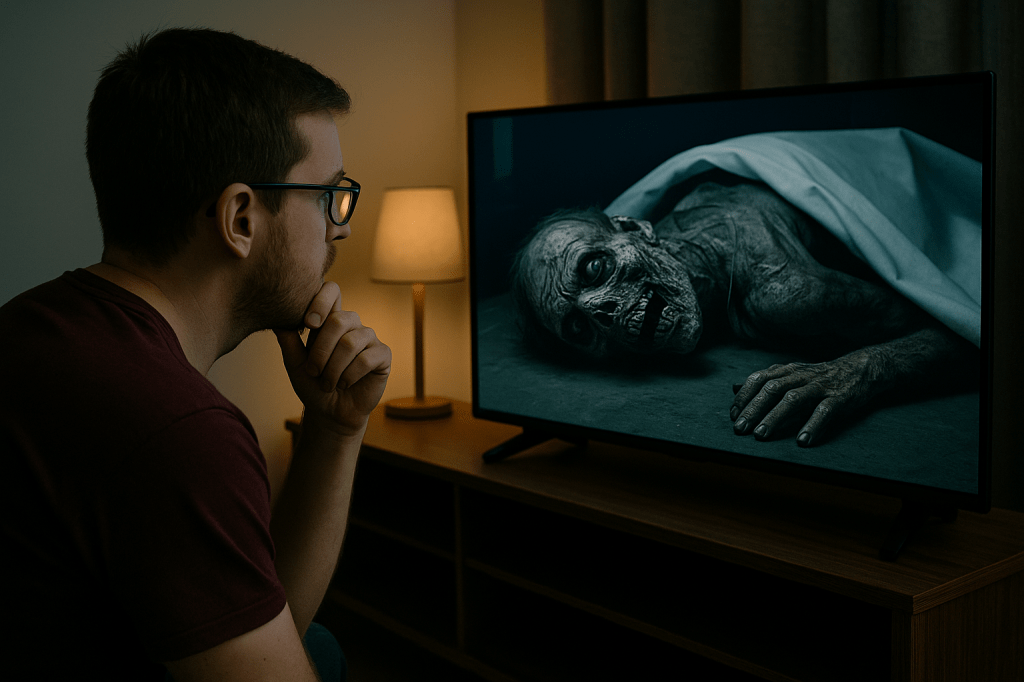
Yet the popularity of horror – from Stephen King novels and The Exorcist to creepypastas and true-crime podcasts – suggests that many of us not only tolerate fear, we seek it out. It’s a peculiar paradox: humans are wired to avoid danger, but we’ll pay for the privilege of a terrifying rollercoaster, a night in a haunted house, or a horror movie marathon that leaves us jumping at shadows. What gives? Why do people actively want to be scared out of their wits?
To get to the bottom of this mystery, I dove into both psychology research and the lore of scary stories. It turns out our love of fear is a multi-headed beast – rather like the monsters in those tales.
Part of the answer lies in biology: when you’re scared (but know you’re ultimately safe), your body has a chemical party. The heart races, adrenaline spikes, and your brain starts mixing its neurochemical cocktail. Psychologists note that the adrenaline and dopamine released during a scare actually hit the brain’s pleasure centres (The science of scares: what makes us love fear – UW Medicine | Newsroom).
In other words, fear gives us a natural high. If you’ve ever laughed right after a jump-scare, that’s why – you get a surge of relief and giddy excitement once you realise the threat isn’t real. As Dr. Michele Bedard-Gilligan explains, it can feel “fun and exciting” to have a fright when you know you’re not in real danger (The science of scares: what makes us love fear – UW Medicine | Newsroom).
The context is key: watching a ghost on TV while you’re snug on the sofa is thrilling because your brain’s higher reasoning assures you it’s just fiction. This safe frame lets you enjoy the ride. In fact, successfully “surviving” a scary experience (say, making it to the end of Hereditary or a haunted hayride) can boost confidence and even elation – we did it, we faced the monster and lived! (The science of scares: what makes us love fear – UW Medicine | Newsroom).
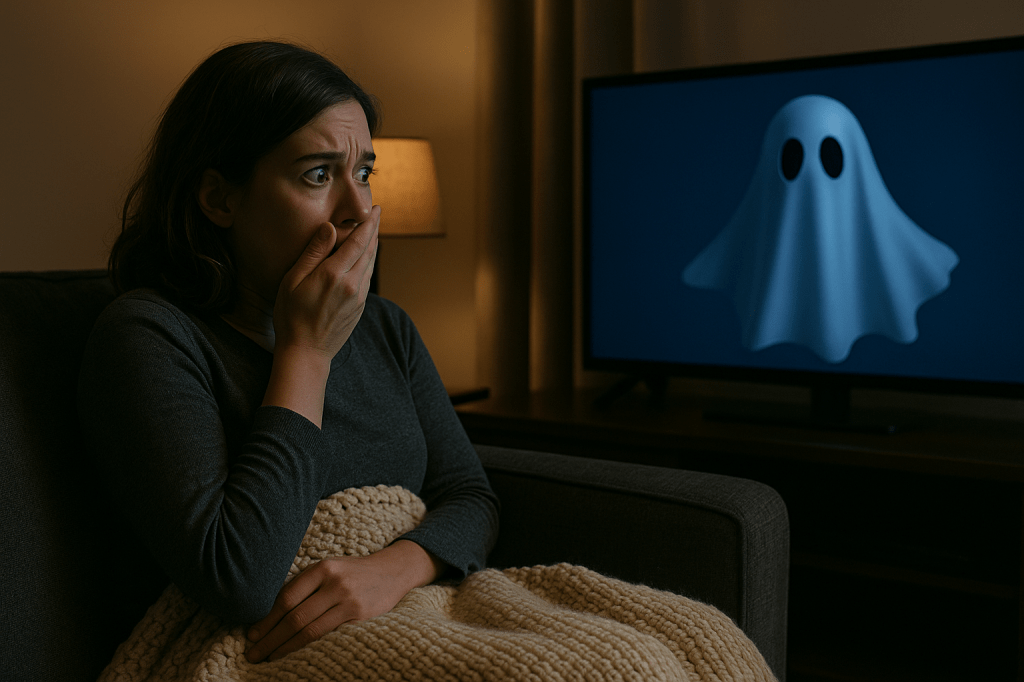
It’s the same triumphant rush you get at the end of a wild rollercoaster – wobbly legs and all – and horror is very much a rollercoaster of emotions. Stephen King himself famously said people watch horror “to show that we can, that we are not afraid, that we can ride this rollercoaster.” (Forms of appeal in Why We Crave Horror Movies by Stephen King) There’s a bit of bravado and challenge in it. How scary can it get? Let’s find out!
Psychologically, not everyone enjoys fear to the same degree – personal traits play a role. Thrill-seekers, for example, often crave intense sensations in general, and horror is a convenient (and comparatively safe) way to get that adrenaline fix. Studies have found a positive link between the trait of sensation-seeking and enjoyment of horror media (Frontiers | (Why) Do You Like Scary Movies? A Review of the Empirical Research on Psychological Responses to Horror Films).
In other words, the bigger the daredevil, the more likely they’ll binge the Paranormal Activity series for fun. On the flip side, people who are very high in empathy or prone to anxiety might find horror too uncomfortable – they’re the ones watching through their fingers or getting genuinely distressed by gore.
Interestingly, the horror fandom isn’t just full of macho thrill junkies; it turns out there are even what one researcher calls “bleeding-heart horror fans” – highly empathetic folks who still love scary stories, perhaps using them as a safe space to explore fear and darkness. Generally though, a key element for enjoying fear is what one set of researchers dubbed a “protective frame” – some part of your brain that recognizes the threat isn’t real, allowing the rest of you to revel in the spookiness (The science of scares: what makes us love fear – UW Medicine | Newsroom).
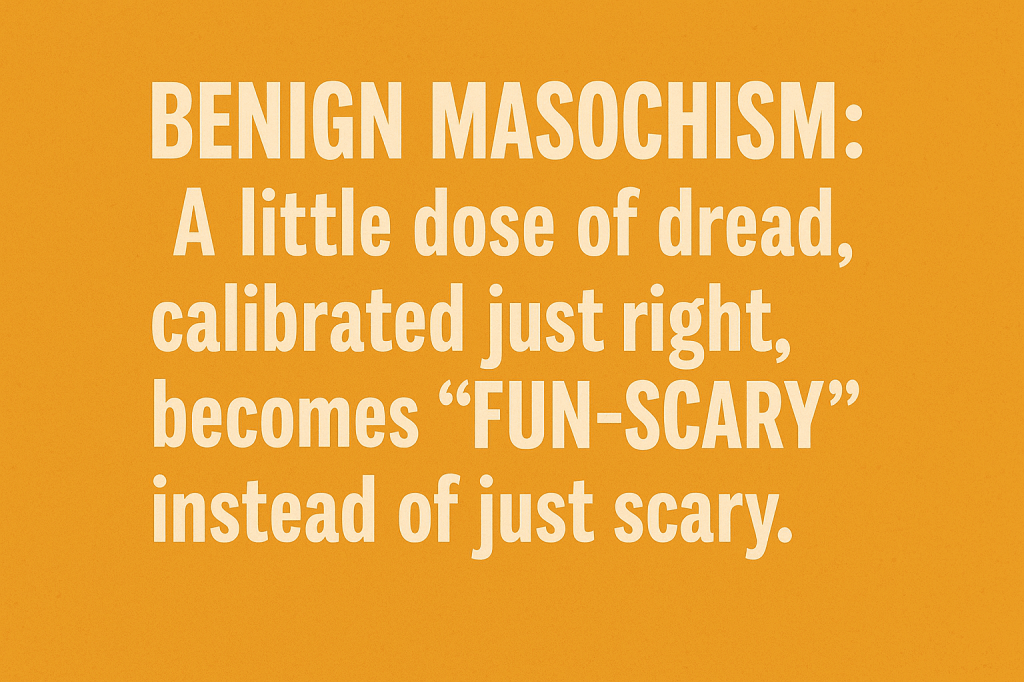
This concept is similar to what University of Pennsylvania psychologist Paul Rozin calls benign masochism: taking pleasure in “negative” experiences as long as you know you’re actually safe (Glad to be sad, and other examples of benign masochism | Judgment and Decision Making | Cambridge Core). We do it with chilli peppers (enjoying the burn), with sad songs that make us cry, and definitely with horror. A little dose of dread, calibrated just right, becomes “fun-scary” instead of just scary.
The trick is that the experience has to stay within tolerable limits – the sweet spot where you’re scared enough to feel the thrill but not so terrified that you’re genuinely miserable. That fine line is different for each person, which is why one viewer’s delight (“That was the best scare!”) might be another’s nightmare fuel.
However, the allure of horror isn’t just about brain chemistry and thrill-seeking. Humans are storytellers, and scary stories have been with us since the dawn of civilization – which hints that fear serves a deeper purpose in our narratives. Our ancestors huddled around fires sharing tales of monsters in the dark, and those tales weren’t merely for entertainment; they were ways to make sense of a dangerous world.
Horror, in a sense, is the sandbox where we play with our nightmares. Modern research suggests that engaging with fictional fear can be a sort of mental training simulator for real-life fears and challenges. One study during the COVID-19 pandemic found that fans of apocalyptic and horror films were handling the stress remarkably well – they showed greater psychological resilience amid the crisis ( Pandemic practice: Horror fans and morbidly curious individuals are more psychologically resilient during the COVID-19 pandemic – PMC ).
The theory is that by watching countless imaginary doomsdays and monster attacks, these horror buffs had unintentionally rehearsed their fear responses. They’d “practiced” feeling afraid and managing it, so a real threat was less paralysing ( Pandemic practice: Horror fans and morbidly curious individuals are more psychologically resilient during the COVID-19 pandemic – PMC ). It’s like their brains said, “Ah, I know this feeling. I’ve been here before – remember that zombie apocalypse marathon?”
In fact, horror movies may act as simulations of danger, letting us safely explore worst-case scenarios and how we might cope ( Pandemic practice: Horror fans and morbidly curious individuals are more psychologically resilient during the COVID-19 pandemic – PMC ). Even a totally unreal monster can impart real knowledge: as one paper noted, although zombies aren’t real, a zombie movie’s depiction of societal collapse can mirror what happens in real disasters – giving viewers a vicarious lesson in chaos management ( Pandemic practice: Horror fans and morbidly curious individuals are more psychologically resilient during the COVID-19 pandemic – PMC ). (No wonder Contagion surged in popularity in 2020 – people were essentially using a movie as a how-to guide for pandemic survival!).
Likewise, in haunted house attractions, researchers observed that visitors actually practice regulating their emotions – consciously downshifting fear to enjoy the fun ( Pandemic practice: Horror fans and morbidly curious individuals are more psychologically resilient during the COVID-19 pandemic – PMC ). Over time, frequent horror enthusiasts might become pretty skilled at engaging and calming their fear – a handy trick not just for ghost hunting, but for life.
Another big reason we seek out scary stories? Curiosity. Specifically, morbid curiosity – that strangely human itch to peek behind the curtain at all things dark, forbidden, or grotesque. It’s the same impulse that makes people slow down to look at a car crash or devour true-crime documentaries.
Psychologists have found that most of us have at least a touch of morbid curiosity; it’s not that we like tragedy or terror, but we’re drawn to understand the extremes. Horror media gives a safe outlet for this curiosity. You can explore the mind of a serial killer, the halls of a haunted asylum, or the claws of a demon, all from the comfort of your couch.
As an expert on horror psychology put it, there’s an “adaptive benefit” to our brains getting these emotional jolts – they jolt us out of mundane reality and might even teach us something about threats and survival (Why Monster Stories Captivate Us – Nautilus). Horror often carries a subtext of learning: don’t go in the basement, don’t trust the smiling stranger, do stick together when the monsters come. These are age-old lessons, really.
In folklore and fairy tales, scary characters like witches, wolves, and boogeymen have long been used to impart morals and cautionary warnings (and keep mischievous children in line!). In fact, from ancient myths to modern horror flicks, monsters reflect the anxieties of their times.
Scholars point out that monsters are powerful symbols of our innermost fears and frailties (Historical Context of Monsters as Metaphors | Inspired Quill Publishing). Think about it: the Victorian fear of untamed sexuality and disease gave us the vampire trope (back then, Dracula was downright terrifying – today, vampires have become romantic anti-heroes, which says something about how our cultural fears have shifted).
The atomic anxieties of the Cold War birthed a slew of giant radioactive creatures and alien invaders in 1950s films. Our stories continuously birth new monsters or reinvent old ones so we can grapple with what’s haunting us beneath the surface. By packaging real fears into fantastical form, horror lets us approach those issues from an angle, with a buffer of unreality.

As the horror writer H.P. Lovecraft observed nearly a century ago, “The oldest and strongest emotion of mankind is fear, and the oldest and strongest kind of fear is fear of the unknown.” (Weird Tales | Lapham’s Quarterly) In horror, the faceless “unknown” takes shape – whether as a ghost, a giant shark, or a masked killer – giving us a chance to face it, or even laugh at it, in a story. It’s a way of whistling past the graveyard, turning our deepest dread into a controlled experience.
Finally, there’s a social aspect to loving scary media. Fear can bring people together – ironic but true. Anyone who’s ever clutched a friend’s arm during a scary scene knows that a good scare can be a bonding experience. On date nights, horror movies are a classic choice not just for the excuse to huddle together, but because the arousal (in the scientific sense!) from fear can easily morph into other excitements.
Psychologists talk about the “misattribution of arousal” – the fact that your body’s fear responses (pounding heart, sweaty palms) can be reinterpreted as, say, romantic adrenaline if you’re snuggled up with a cute date. No wonder a spooky film and a bucket of popcorn remain a matchmaking staple.
Even among friends, there’s a certain camaraderie in screaming together and then laughing about it afterwards. We tell and retell the best horror stories, daring each other to watch the next scary blockbuster, almost as a weird rite of passage. It’s bragging rights too – ‘I made it through The Conjuring without covering my eyes once!’ – a playful way to compete and show our courage, however illusory. In a safe setting, we collectively conquer the ghost or monster, and that feels rewarding.
At the end of the day, the question of why we chase horror boils down to this: fear is a fundamental human experience – and when harnessed in the right way, it can be thrilling, enlightening, and even oddly comforting. Scary stories let us play with fear like a cat with a mouse, tapping into something ancient and primal but within boundaries we control. We learn about ourselves and our world through nightmares and ghost stories, all while enjoying the rush. It’s a testament to the complexity of the human mind that we can scream and laugh in the same breath.
So, next time I see someone begging for a movie that will utterly terrify them, I’ll smile in understanding. They’re not crazy (well, no more than the rest of us); they’re indulging in a tradition as old as humanity – dancing with the darkness for a little while, to come out the other side with hearts pounding and eyes opened wide. To be human is to be afraid, and perhaps, strangely enough, to love being afraid.
After all, if our ancestors painted monsters on cave walls and spun chilling tales around campfires, who are we to deny the call of a good scare? Sweet dreams… or rather, terrifying nightmares – if that’s what you’re into. Just don’t ask me to join when I have work in the morning, because unlike some horror-hungry souls, I do value my sleep!

 Home
Home 
Leave a comment